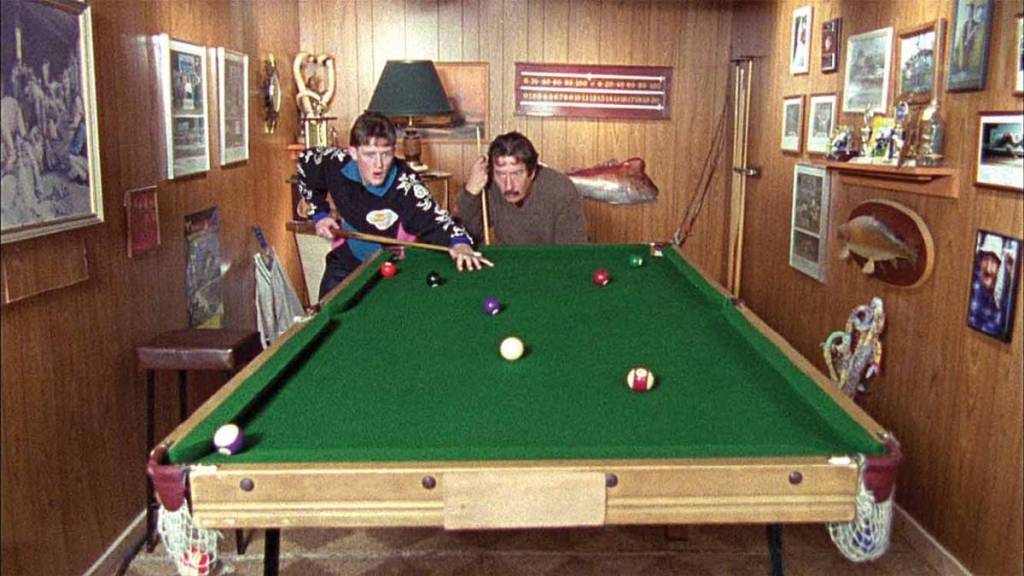
First things first, I adore The Castle.
It was first shown to me by my neighbours when I was nine or ten, and the whole thing went a mile over my head, except for Dennis Denuto (as seen on TV) swearing at his faulty photocopier. But around me everyone was in hysterics; “tell him he’s dreamin’”, “the serenity” and “the vibe” were all repeated and laughed at all night long. I didn’t get why it was funny, it was the same kind of thing I heard all the time, in the kinds of voices I grew up around.
A few months later I dug out a DVD copy we had at home and decided to show my cousin, who is a little older than me, what I thought was a stupid movie with some funny swearing. He was a bit puzzled by it, but all of a sudden I thought it was hilarious, and it’s been one of my favourite movies ever since. However, I’ve had to think longer and harder about this love as I’ve not only become a media student, but as I’ve grown and developed as a person. I will look to explore its significance to the Australian film industry, and its culture, looking at a number of important factors along the way.
When examining the Australian film industry and its content, it’s important to understand the government influences behind what is produced. For the last 15 years Screen Australia has been the Federal Government’s key funding body for the screen industry. When The Castle was released in 1997, the Australian Film Commission, Film Australia and the Film Finance Corporation of Australia performed this role.
Screen Australia combined these bodies in 2008, and they describe their role as supporting “the development, production, promotion and distribution of Australian narrative (drama) and documentary screen content. The agency invests directly in Australian film, television, online titles and games.”
Interestingly, the Working Dog Productions team of Rob Sitch, Santo Cilauro, Tom Gleisner and Jane Kennedy did not engage these bodies, and instead used their own funding, and some from Village Roadshow for distribution, to shoot the entire film across 10 days on a budget of around $500,000.

After the film was released Cilauro told magazine Cinema Papers that “the fact that we were putting in our own money meant we had to stick to that timetable. If we were going to do it on our own terms, then we had to do it with our own money … Basically we were told by our fifth, silent and non-creative partner – who’s just as creative when it comes to money – ‘you can shoot for ten days, maybe 11, and that’s when the catering runs out!”
From this shoestring budget came an eventual box office taking of over 10 million dollars, which at the time put The Castle into the top 10 grossing Australian films of all time.
Sitch, Cilauro, Gleisner and Kennedy were already a successful team in the television and radio game at the time, but the fact that a movie that exudes such “Australian-ness” was not funded by these bodies is thought-provoking.
What is more thought-provoking is considering what Australian content really is, and why it matters to us on a cultural, political and social level. A report presented to Screen Australia by Olsberg SPI in 2016 titled “Measuring the Cultural Value of Australia’s Screen Sector” made an attempt to quantify some of these factors.
A conclusion they made on the film industry was that “the institutional value of the biggest Australian productions is facilitated by their recognition in the survey as being Australian. This allows the soft power aspects of productions to be generated, as at least part of the audience can be seen to recognise the creative talent of Australian cast, crew, and key creatives working on these productions.”
This displays Australia’s appetite for familiarity in the media we are responsible for as a nation, giving credence to the funding that Screen Australia receives to create said works. As Vincent O’Donnell writes in The Conversation, “Australians are good at obsessing about what makes them different and unique, particularly so in their local films.” This is where I believe that a love for “the vibe” and the “tell ‘im he’s dreamin’’ knockabout Ocker humour comes into the equation for me and many others as a viewer, but it’s important to remember that this is not a one size fits all topic.
To me, The Castle is as Aussie as it gets; the slang, the fashion, the slap-up production, but that doesn’t mean everyone will feel the same way. This is why over time Screen Australia have looked to broaden the horizons of what we consider to be Australian in film, looking to tell more stories from more walks of life in what is a diverse country with a rich history of storytelling.
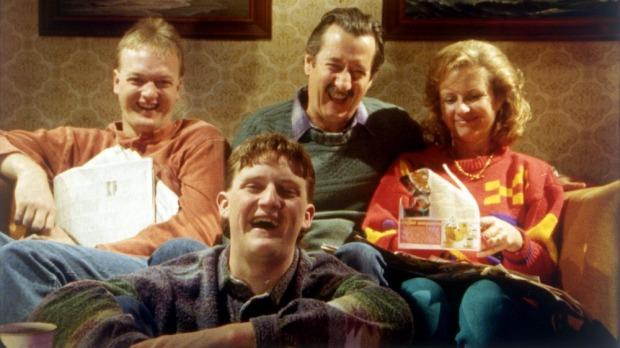
In summing up, like the great Denuto, The Castle has a special place in my heart, and in the cultural fabric of Australian film. It may not be everyone’s cup of tea, but I truly hope that everyone has a piece of media they feel the same way about as they reflect their lived in experience as an Australian, or wherever they come from. The challenge for the creatives of our nation is to continue to tell stories that illuminate viewers in the same way, and continue to show their cousins, and their cousin’s cousins, to build the web of storytelling that pieces of media such as this can create within a nation, regardless of its location.
References
Olsberg SPI. (2016), Measuring the Cultural Value of Australia’s Screen Sector, Screen Australia, p.27
O’Donnell, V. (2012), Strewth! How Aussie does Australian cinema need to be?, The Conversation, Available at: https://theconversation.com/strewth-how-aussie-does-australian-cinema-need-to-be-5232
Screen Australia. (2023), About Us, Australian Government, available at: https://www.screenaustralia.gov.au/about-us
Malone, P. (1997) A House is a Castle, Cinema Papers, p10-12
 Russ Haylock Sportswriting
loved reading your post.
Here is what I think
Great article! It provides an interesting insight into the funding and culture of Australian film, using The Castle as an example.
Ely Shemer
LikeLike