For my “What’s Hidden?” JRNL photojournalism piece I captured life at Campus East in second semester, and how the introduction of Abbey, staff-member Mr Chris Tulloch’s labrador, assisted students in overcoming homesickness and improved their outlook on life during lockdown.
I formed this idea after seeing many residents walking Abbey around campus and down at the beach and how excited people were when she came in, and thought of my friend and Campus East Community Leader Grace as a talent as she is from a rural area and is an owner and lover of many dogs.
I interviewed and went for a walk with Grace capturing images of her and Abbey together, and then tried to match them up with her interview later on.
When taking images on our walk and when I took photos around Campus I looked to implement the “Golden Ratio” and use depth of field in my images.
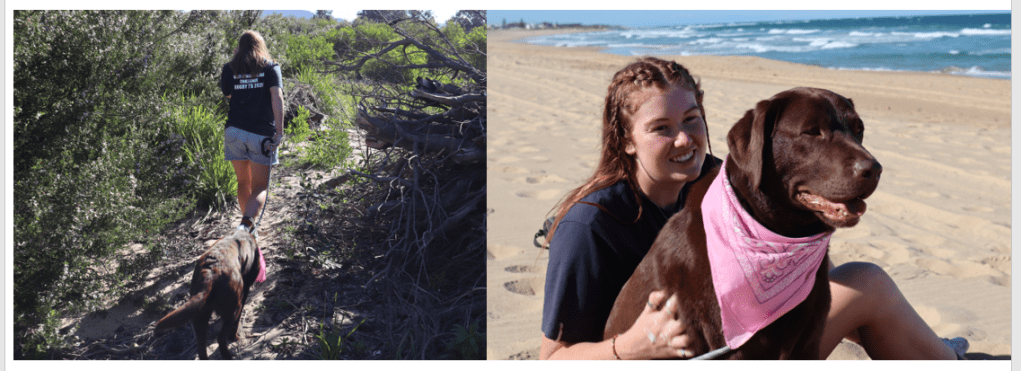
These are areas I’d like to improve on, but were done with lecture content in mind in, and slowly developing and storyboarding the way these would follow the principal of photojournalism in “re-inventing itself as creative ways, combining visuals with audio, and extending the way we see and understand the world” (Week 8).
I then used editing software to filter the images taken around campus and made the decision that they were best represented in black and white.
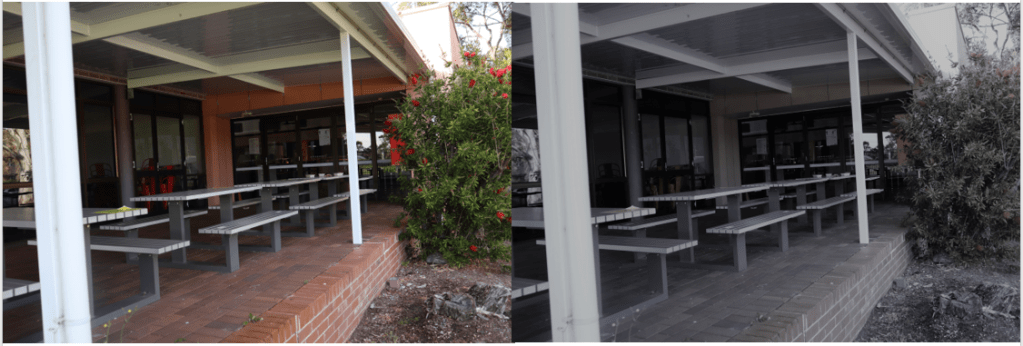
I also received some images from Grace of her dogs at home, and feel they worked well as a comparison as they come from different settings and moments in time.
There were some challenges along the way, for example I moved back home from Campus East to work, so I had to conceptualise this project early in terms of visuals, and in choosing to prioritise this aspect of the piece I then interviewed Chris and did further research later on from home. Academic research for my lead was something that was focused on after receiving feedback, as well as better timings and breathing space in the video itself.
In hindsight I wish I had conducted the interview before taking the photos to better understand how I would capture the visuals to work best in the photojournalism piece, however I was able to angle my questions to fit the images taken and received.
When writing my lead I looked to the resource “Slides for Good Writing” and I feel that the end product was active and clear, although it did require some clarifications to ensure that while the “What’s Hidden?” element isn’t revealed until the mid-point of the video, the article is still factual. The piece looks at Abbey from a different viewpoint and displays her as a very important part of this story when focusing specifically on Campus East in her role in alleviating homesickness and feelings of isolation while lockdown regulations were in place.
Overall the way in which I was able to present this piece was done with the learnings of photojournalism in mind. I neglected to use music as I felt my talent’s voice and tone ably demonstrated the moods associated with each topic in my interview. Grace’s voice is upbeat when discussing first semester, slows and sounds more dull through the middle when referencing lockdown, but is happier in terms of dialogue and tone when speaking about the positive impact of Abbey and speaking about her dogs at home. This helped me with the visual editing as well, in terms of use of colour and how long a photo would be displayed if it was one that had deeper meaning and required further examination, or if it was simply a part of the narrative.
In conclusion I am pleased with the end result of my project, and feel that it represents the range of moods and challenges that have risen throughout 2021 and takes a newsworthy story of alleviating homesickness and looks at it with a creative edge to underline the positive effect of Abbey’s presence around Campus East through the images, interviews, research and visual effects that have been undertaken to present my “What’s Hidden?” project.
 Russ Haylock Sportswriting