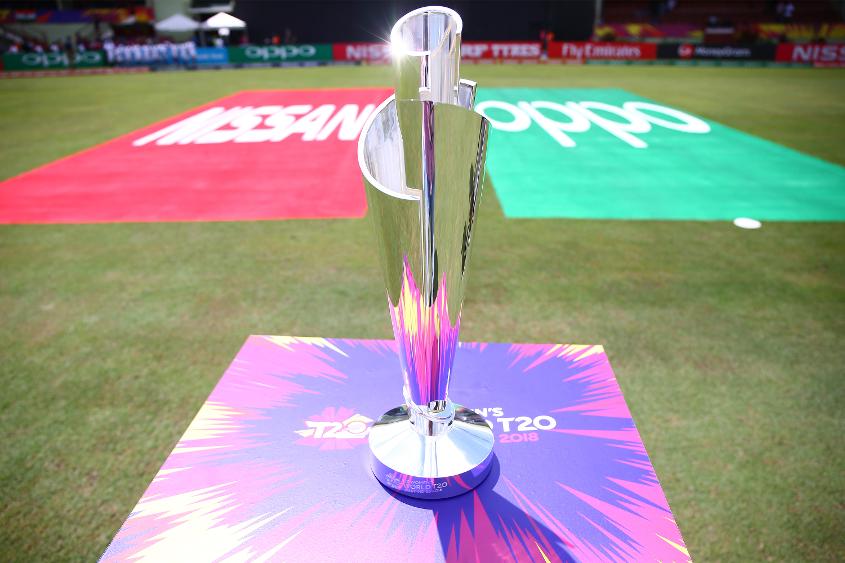
With lowly-ranked teams always struggling to secure matches against more high-flying opponents, tournaments like the T20 World Cup always come with the promise of a potential upset. Here are my top five in the history of the tournament, with videos below or in embedded links for each match.
Zimbabwe beat Australia (2007)
While they won’t be present at this year’s World Cup, Zimbabwe pulled off arguably the greatest upset in the tournament’s history in its inaugural year, beating Australia by four wickets in a final over thriller. Their fielding was faultless as Elton Chigumbura (3/20) and Gary Brent (2/19) starred with the ball, while Brendan Taylor and Vusi Sibanda provided highlights with a stumping and a direct-hit run out respectively. Taylor and Sibanda then opened the innings for Zimbabwe and put on a commanding 31 run stand to begin the innings, before Sibanda fell for 23 in the fourth over. Taylor and Chamu Chibhabha then put on 23, however Chibhabha’s dismissal for 15 triggered the loss of two more wickets to leave the underdogs requiring 69 off the last nine overs with six wickets up their sleeve. Taylor then began his attack, and alongside Hamilton Masakadza (27) ensured Zimbabwe would take the game down to the wire. Needing 12 off the last over Taylor struck two boundaries off Nathan Bracken to get his team over the line with a ball to spare, with the image of the Zimbabwean players storming the field providing a great deal of ecstasy considering the agony they had endured since the 2004 player exodus and their suspension from Test cricket. To this day, Taylor’s knock and their overall performance remains one of their greatest ever on the big stage.
Netherlands beat England (2009)
Another great upset in the history of the ICC T20 World Cup came in the first match of the 2009 tournament, where a largely amateur Netherlands team took on host nation England at Lord’s. England fans would have been forgiven for expecting a breezy match against the Dutch, and it looked that way as their team flew to 102/0 inside the first 12 overs, with openers Ravi Bopara and Luke Wright seemingly at ease against the Dutch bowlers. Clever bowling from Peter Borren, Edgar Schifleri and Ryan ten Doeschate allowed them to pull the hosts back to 162/5 off their 20 overs, still a formidable score, but it had looked like being a lot higher while Bopara and Wright were at the crease.
The Netherlands then made a solid start in terms of run rate, but unlike England they lost wickets early to find themselves 2-23 in the fourth over. It was number four Tom de Grooth who allowed them to grab some momentum, as he and Bas Zuiderant put on a 43 run partnership in less than five overs, with de Grooth dominating the scoring. Peter Borren then combined with de Grooth and made a clever 30, taking over the chase when his partner fell for a blistering 49 off 30 balls. Borren looked like he’d be able to get them home, but when he fell with four overs to go the Dutch still needed 30 to win. Daan van Bunge joined Ryan ten Doeschate at the crease, but was dismissed two overs later, the equation now 17 off 12. New batsman Edgar Schifleri and ten Doeschate took 10 off Ryan Sidebottom, leaving seven to win off Stuart Broad’s last over. It came down to 2 off 1, and it seemed that Broad had saved them when he executed a yorker to Schifleri, and would have run him out but missed, allowing them to steal an overthrow and clinch what is still their most famous win by four wickets.
Ireland beat Bangladesh (2009)
Bangladesh had been steadily building worldwide respect, particularly in white ball cricket, in the lead up to their match against Ireland in the 2009 edition of the then World T20. Ireland had enjoyed support and form since their historic win over Pakistan in the 2007 ICC World Cup, but were still inexperienced in major ICC events. Bangladesh batted first in this clash and struggled to 137/8, helped by Mashrafe Mortaza’s 16-ball 33 from number eight, with no other Bangladeshi passing 22. Trent Johnston starred with the ball, taking 3-20 off his four overs, while the other bowlers chipped in with one each.
The chase began slowly, with Jeremy Bray dismissed early and the score at 8/1 after three overs. Enter Niall O’Brien, who smashed 40 off 25 balls, including three sixes off one Mortaza over, to get the chase on track, the score 2/61 off 9.4 overs when he was dismissed. Opener William Porterfield never truly got going in his innings of 23, and when Gary Wilson was out for 10 the Irish required 49 off the last 34 balls. It was the youngest of the brothers O’Brien who seized the momentum, with Kevin striking 39 off 17 balls, and finding a partner in John Mooney, who made 17 off 10, to completely swing the match and secure Ireland a second victory over a Full Member in the space off two years, this time by six wickets with 10 balls to spare.
Netherlands beat England (again) (2014)
Following a 5-0 Ashes drubbing at the beginning of 2014, England had seemingly found some form in the early stages of the tournament, beating eventual Sri Lanka and losing narrowly in a rain-affected match against New Zealand. They then fell just short in a chase of 197 against South Africa, and would have been hoping for a big win over the Netherlands, who had famously beaten Ireland to qualify for the next stage, to cap off the tournament. The Dutch had other ideas though, despite being restricted to 133/5 in their first innings. Wesley Barresi made 48 off 45 balls in an anchoring innings, while Stuart Broad (3/24), Chris Jordan (1/13) and Ravi Bopara (1/15) were the best of England’s bowlers.
England’s star-studded white ball top order succumbed to the Dutch seamers, with Hales, Lumb, Ali, Morgan and Buttler all back in the sheds after 10 overs, with the score at 5/42. Bopara and Jordan tried to start a revival, but the writing was on the wall, with England crumbling to 88 all out, once again being beaten by the Netherlands, who to this day have never been defeated by England in a T20 international.
Oman beat Ireland (2016)
In their World T20 debut Oman faced Ireland, who had assembled a full strength team and would have hopes of qualifying to the next round of the 2016 tournament. After scoring 154/5 they would have been confident of outclassing the debutants in the chase, with experienced campaigners in Boyd Rankin, Tim Murtagh and Kevin O’Brien in their ranks. Oman attacked from the outset, with openers Khawar Ali and Zeeshan Maqsood batting stylishly to get them to 0/69, before O’Brien took the first of his two wickets by bowling Ali in the ninth over. The favourites then began to turn the screws, reducing Oman to 90/5 with six overs to go. Amir Ali then began playing the innings of his life, smashing Murtagh for 20 to get the chase back on track, and with two overs to go they needed 18 more runs. Boyd Rankin bowled the penultimate over and conceded only four, leaving seamer Max Sorensen to defend 14. He began with a nervy no-ball that Ajay Lalcheta hit for four, but then dismissed Ali with the fourth ball of the over. With Oman needing five off two, Sorensen missed his mark with a no-ball that keeper Gary Wilson failed to stop, and in a topsy-turvy clash for the ages, Oman had their first win.
 Russ Haylock Sportswriting