Of all my pop culture interests one stands out far above the rest, one that ended nearly four years before I was born, the American sitcom Seinfeld. The show features more prominently in my Instagram and Facebook feeds than any celebrities, influencers or the like, I simply have my friends, my family, my sport, and my Seinfeld. And do I get sick of seeing clips of the same four characters from episodes I’ve already seen? No way. Because for me these pages combine modern life and nostalgia, and particularly with the world the way it is, to make not only jokes but fair comment on political and social issues affecting the way we live.
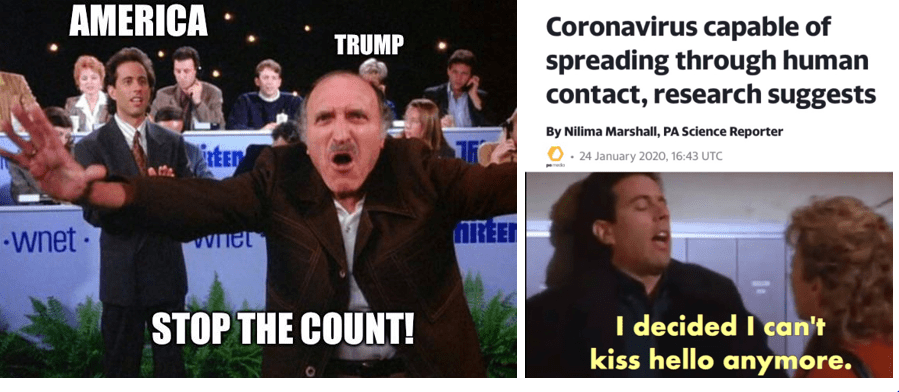
The ability for fan accounts and the show’s own social platforms to produce relatable content appeals to me as it keeps the edge of “the show about nothing” sharp. This is where American media scholar Henry Jenkins’ “convergence culture” theory becomes relevant.
Jenkins describes convergence in popular culture as “the flow of content across multiple media platforms, the cooperation between multiple media industries, and the migratory behaviour of media audiences who would go almost anywhere in search of the kinds of entertainment experiences they wanted.” These factors increase the popularity of the show as they allow the show, despite finishing over two decades ago, to evolve and remain funny and relatable to a contemporary audience.
My personal experience relating to this theory was when I joined Twitter for use in my studies, I instinctively followed a range of pages I was interested in, with Seinfeld being high in my priorities. This instinct amongst fans allows the show to remain popular and gives it the demand to still be broadcast and available on streaming services. It’s what fans can then do on said platforms that relate the show to modern life through memes, fan art and fan fiction that furthers this popularity.
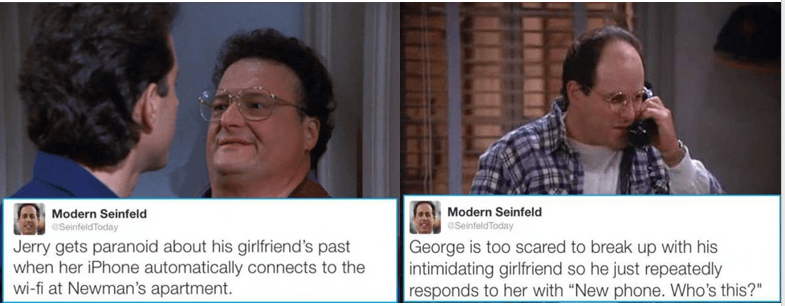
Pop culture writer Jennifer Keishin Armstrong’s details how the show combines insight, context and influence on the show and how it relates to modern culture in her book Seinfeldia. In an interview with Smithsonian magazine Armstrong stated that “It’s [Seinfeld] one of the most influential shows of our time and, as I talk about in the book, it has this long and involved after life that still feels relevant today even though it’s 20-something years since it was on, which is crazy.”
She describes the reason for this as being “because they speak to sort of these deeper everyday struggles. Our everyday struggles feel big to us even if they’re tiny and they dramatize that feeling. Little dumb annoyances happen to you and you think to yourself this is a “Seinfeld” moment. So that’s why I think it keeps resonating with us.”
These “annoyances” may include waiting for a table in The Chinese Restaurant, losing your car in The Parking Garage, or the dramas of picking up a friend from The Airport, and with the convergence of media platforms and existence of fan pages and discussion boards, they will remain relevant for current and future fans of “the show about nothing”.
References
Jenkins, H. 2006. ‘Welcome to Convergence Culture’, Henry Jenkins, viewed 9 August 2021. http://henryjenkins.org/blog/2006/06/welcome_to_convergence_culture.html
Nodjimbadem, K. 2016, ‘What gives Seinfeld its staying power?’, Smithsonian Magazine, viewed 10 August 2021, https://www.smithsonianmag.com/arts-culture/how-seinfeld-show-about-nothing-changed-everything-180959780/
 Russ Haylock Sportswriting