Rafael Nadal vs Michael Mmoh, Second Round Match, Rod Laver Arena, February 11, 2021.
Myself, my cousin, and thousands of COVID-safe spectators had packed into Centre Court at Melbourne Park for this second round Australian Open match, featuring second seed and all-time great Spaniard Rafael Nadal and plucky American world number 182 Michael Mmoh. To watch Nadal was enthralling, the intricacies, the superstitions, the meticulous preparation.
Never before had I been a part of such an active audience, heads turning in rhythm for each forehand, backhand, serve and volley. We sat high up in the stands on this particular warm night, with the rows of spectators beneath us rotating like clown heads at a country show.
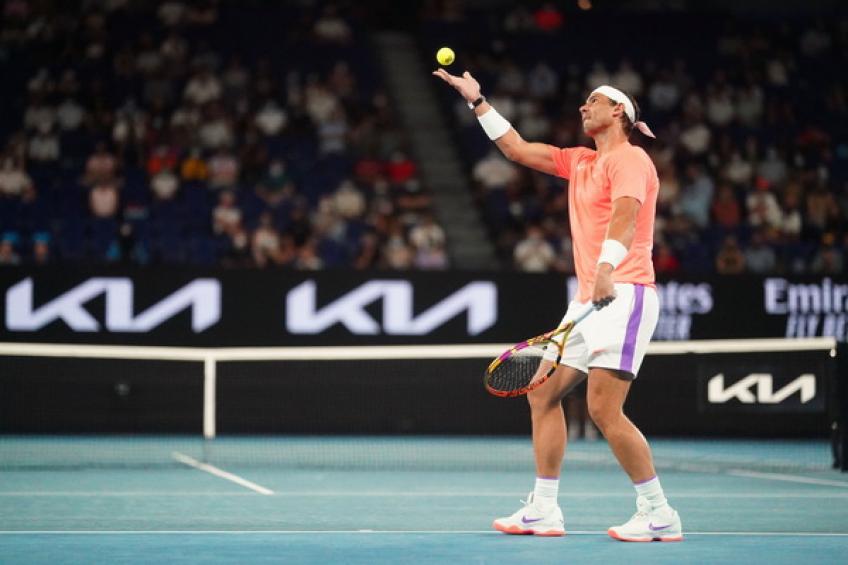
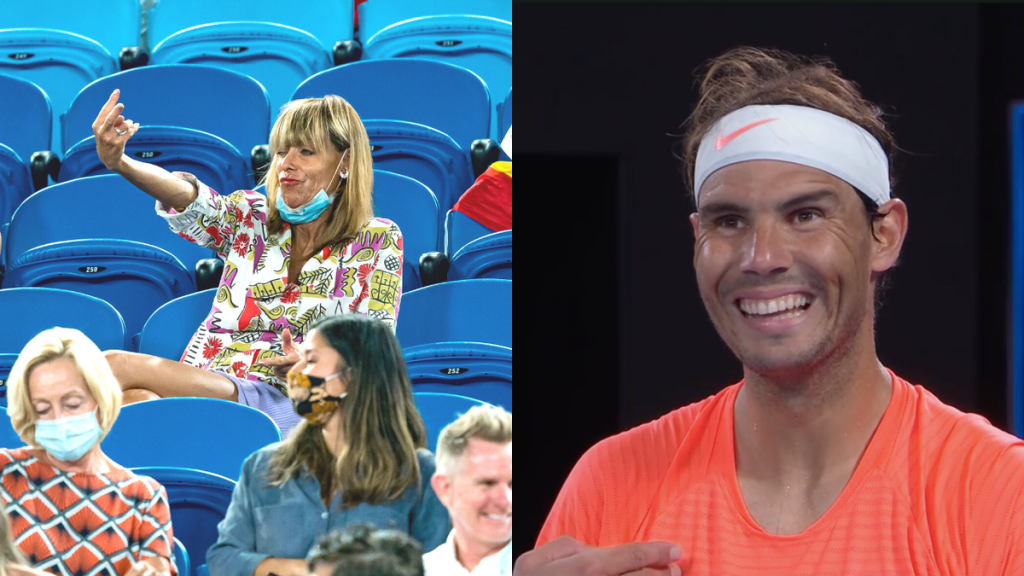
Tennis is a sport that requires crowd obedience, with the cheers after a great Nadal ace or winner erupting following the deafening silence during a point. When watching on TV I am often distracted, and my head will come up from my phone, laptop or a book only for the big moments, but here in the crowd I am fully engaged, fully obedient. In the second set there is an interruption to Nadal’s serve from a lady sitting near us who I later heard the commentators describe as “maybe a bit inebriated”, which would be an understatement. She is escorted from the stadium by security as expected, and Nadal completed a straight sets victory
In her paper “Television and the Active Audience”, Sonia Livingstone from the London School of Economics and Political Science examines TV audiences and their passive/active tendencies, but I feel her thoughts on what makes an audience active apply to this situation.
“Audiences must interpret what they see even to construct the message as meaningful and orderly, however routine this interpretation may be,” writes Livingstone.
And in our case this was meaningful but certainly not orderly, and our immersion in the environment plus this anomaly makes this a vivid memory within the crowd.
Livingstone continues this point, writing “the experience of viewing stands at the interface between the media (and their interpretations) and the rest of viewers’ lives, with all the concerns, experiences and knowledge which this involves.”
In our experience we hadn’t seen anything quite like this in a tennis audience, with the knowledge that they are usually so orderly, and our concerns were alleviated once the lady was shown her way out of Rod Laver Arena.
Despite the interruption, the response was a positive one, with plenty of laughs and chatter going around the venue once the initial booing had settled down.
Overall, this was an immersive environment to be in, and one I will always remember not just for the antics of “courtside Karen”, but the enjoyment of being a part of such an active and lively audience at one of my favourite sporting events.
Livingstone, S. (2000) Television and the active audience, The London School of Economics and Political Science. Available at: https://www.researchgate.net/publication/30527844_Television_and_the_active_audience
Wide World of Sports, (2021), Rafael Nadal vs Heckler, Available at: https://www.youtube.com/watch?v=BunHoC-wHPY&t=172s&ab_channel=WideWorldofSports
 Russ Haylock Sportswriting